


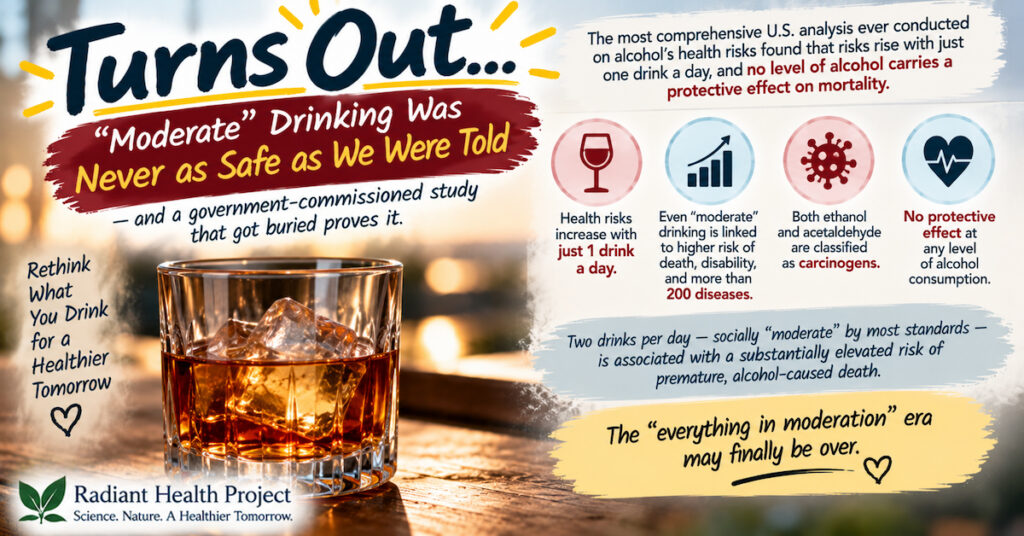
Turns out… that “moderate” drinking was never as safe as we were told — and a government-commissioned study that got buried proves it.
By Mark J Kaylor
Researchers at the University of Toronto, Columbia University, and the University of Victoria spent years building the most comprehensive U.S. analysis ever conducted on alcohol’s health risks. Their conclusion: health risks rise with just one drink a day, and no level of alcohol carries a protective effect on mortality. Even what most Americans consider moderate drinking is linked to increased risk of death, disability, and more than 200 diseases, including cancer and heart disease.
Here’s where it gets darker. Two drinks per day, socially “moderate” by most standards, is associated with a substantially elevated risk of premature, alcohol-caused death, according to the study’s co-author. No protective effect was observed even at low levels.
As for what alcohol is actually doing in the body, it’s not subtle. Both ethanol and acetaldehyde, the byproduct created when the body metabolizes alcohol, are classified as carcinogens, causing damage through DNA disruption, oxidative stress, hormonal changes, and gut microbiome alterations.
The “everything in moderation” era may finally be over.

Mark J. Kaylor is a passionate advocate for holistic health and natural remedies, with a focus on extending both lifespan and healthspan. As the founder of the Radiant Health Project and host of Radiant Health Podcast, Mark blends in-depth research with traditional wisdom to empower others on their journey to vibrant health. Through his writing and speaking, he shares insights into the transformative power of herbs, nutrition, and lifestyle practices.
The Radiant Health Project is a not-for-profit initiative dedicated to cutting through wellness industry hype and sharing evidence-informed, traditional wisdom for genuine health.
Disclaimer: All information and results stated here is for educational and entertainment purposes only. The information mentioned here is not specific medical advice for any individual and is not intended to be used for self-diagnosis or treatment. This content should not substitute medical advice from a health professional. Always consult your health practitioner regarding any health or medical conditions.
Leave A Comment