


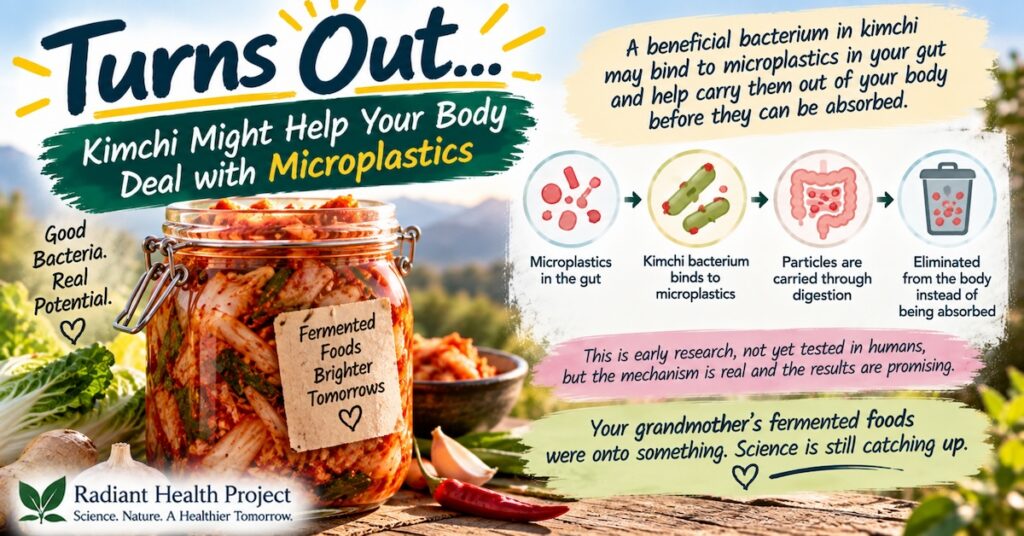
Turns Out kimchi might help your body deal with microplastics.
By Mark J Kaylor
Turns out something living in a jar of kimchi may be doing a job nobody expected: grabbing microplastics in your gut before your body can absorb them.
Researchers at South Korea’s World Institute of Kimchi identified a lactic acid bacterium naturally present in kimchi that binds to nanoplastics under conditions designed to mimic the human intestine. Once attached, the bacterium carries the particles out of the body rather than letting them cross the gut wall and accumulate in tissues.
The finding matters because nanoplastics are now showing up in human organs, blood, and even brain tissue, and strategies for limiting that accumulation are essentially nonexistent at the moment. A bacterial approach that works passively, during digestion, from food people already eat, is a genuinely different direction.
The honest caveat: this is early research. The bacterium was isolated and tested in controlled conditions, not measured in a bowl of kimchi over dinner. Human studies haven’t happened yet. But the mechanism is real, the results were promising, and the researchers are already calling it a new biological approach to an emerging problem.
Your grandmother’s fermented foods were onto something. Science is still catching up.

Mark J. Kaylor is a passionate advocate for holistic health and natural remedies, with a focus on extending both lifespan and healthspan. As the founder of the Radiant Health Project and host of Radiant Health Podcast, Mark blends in-depth research with traditional wisdom to empower others on their journey to vibrant health. Through his writing and speaking, he shares insights into the transformative power of herbs, nutrition, and lifestyle practices.
The Radiant Health Project is a not-for-profit initiative dedicated to cutting through wellness industry hype and sharing evidence-informed, traditional wisdom for genuine health.
Disclaimer: All information and results stated here is for educational and entertainment purposes only. The information mentioned here is not specific medical advice for any individual and is not intended to be used for self-diagnosis or treatment. This content should not substitute medical advice from a health professional. Always consult your health practitioner regarding any health or medical conditions.
Leave A Comment