


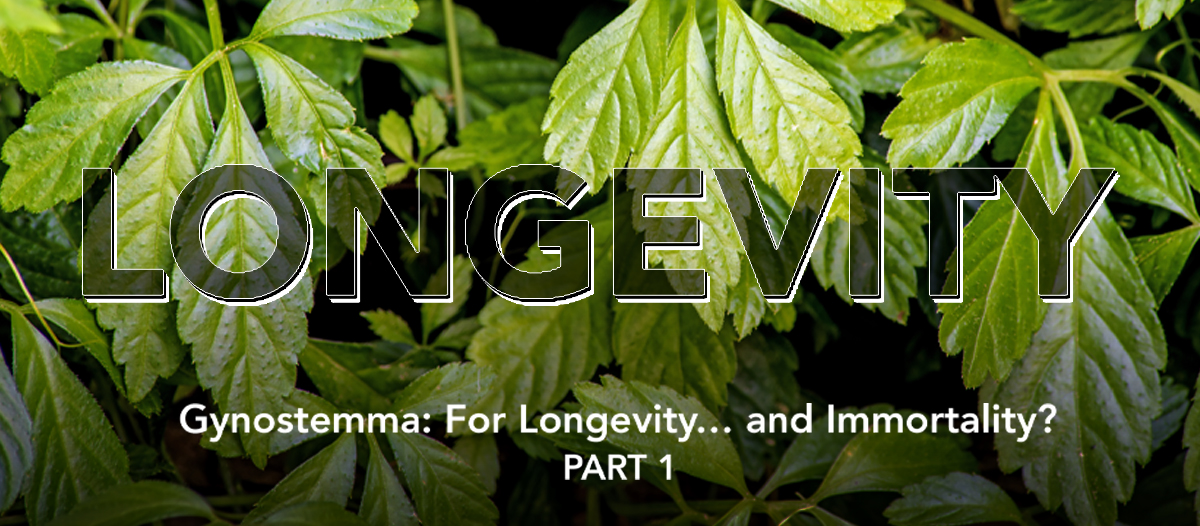
Gynostemma:
For Longevity… and Immortality?
PART 1
by Mark J Kaylor
While wellness trends chase the next expensive superfood, researchers are discovering that an unassuming vine consumed daily as tea in Chinese mountain villages may hold keys to healthy aging that most people have never heard of. Gynostemma pentaphyllum, the “immortality herb”, doesn’t just offer traditional adaptogenic benefits. It activates AMPK, your body’s master metabolic regulator that typically requires exercise or fasting to stimulate. Studies show it improves exercise performance, supports healthy blood sugar, protects cardiovascular health, and may help your cells function more like they did when you were younger. The best part? It costs a few dollars as a tea and has been safely consumed for centuries. No proprietary formulations. No celebrity endorsements. Just an herb that communities noticed helped people live long, healthy lives, and modern science is finally catching up to explain why.
Gynostemma pentaphyllum (Jiaogulan), known as the “immortality herb,” is an adaptogenic plant from Traditional Chinese Medicine that’s gaining scientific attention for its ability to activate AMPK, the body’s master metabolic regulator. With benefits ranging from blood sugar regulation and cardiovascular support to stress resilience and healthy aging, this affordable herb offers research-backed metabolic support without the price tag of trendy supplements.
There’s something quietly remarkable about herbs that have sustained entire communities for generations without needing a marketing campaign. Gynostemma pentaphyllum is one of those herbs. While the wellness industry churns through adaptogen trends, this unassuming vine has been doing its work for centuries in the mountains of southern China, earning the name “immortality herb” not through branding but through observed longevity in the people who drank it daily as tea.
What makes Gynostemma particularly compelling for our time is that modern research is catching up to what traditional wisdom knew: this herb appears to influence fundamental metabolic pathways that decline with age. Specifically, it activates something called AMPK, a master regulator of cellular energy that typically requires exercise or caloric restriction to stimulate. The fact that an affordable, accessible herb can gently influence this pathway feels significant, especially when so much of the wellness conversation has been captured by expensive interventions.
This is an herb that deserves more attention, not because it promises miracles but because it represents something increasingly rare: genuine traditional grounding paired with solid research, available without the price tag of proprietary formulations or celebrity endorsements.
What Is Gynostemma Pentaphyllum? Plant Background and Origins
Gynostemma pentaphyllum is a climbing vine belonging to the Cucurbitaceae family, the same botanical family that includes cucumbers, melons, and gourds. The name “pentaphyllum” refers to its characteristic five-pointed leaves, though some varieties can have three or seven leaflets. It’s these leaves, along with the stems, that hold the medicinal properties. The small purple berries that the plant produces are considered inedible.
The vine grows wild across a broad geographic range in South and East Asia, thriving in the mountainous regions of southern China, northern Vietnam, Korea, Japan, India, Thailand, and extending into parts of Southeast Asia. It prefers temperate climates with adequate rainfall, often found growing on forest slopes at elevations ranging from 300 to 3,200 meters above sea level. The plant is hardy and adaptable, able to grow in various soil conditions with partial to full sun exposure.
In China, it’s known as Jiaogulan (绞股蓝), which translates roughly to “twisting blue plant” or “entwining orchid,” a reference to its vine-like growth habit and the slightly bluish cast of its stems when young. Other names reflect the plant’s reputation: Xiancao (仙草) means “immortal grass,” while it’s also called “southern ginseng” because it grows in southern China and has been used traditionally in ways similar to Panax ginseng, though the two plants are not botanically related. Gynostemma belongs to the gourd family, while true ginseng belongs to the Araliaceae family.
The comparison to ginseng isn’t arbitrary. Both plants contain saponins, the active compounds that give them much of their medicinal properties. In fact, researchers have identified over 80 different gypenosides (the saponins found in Gynostemma), while Panax ginseng contains around 30 ginsenosides. Some of these compounds are structurally identical or very similar between the two plants, which helps explain their overlapping traditional uses. But there’s a crucial difference: Gynostemma tends to have a gentler, more balancing effect compared to ginseng’s sometimes overstimulating nature, and it’s significantly more affordable and sustainable to grow.
Traditional Uses of Gynostemma in Chinese Medicine: The Longevity Connection
Gynostemma’s history in documented traditional medicine is more recent than many classical Chinese herbs. It first appeared in the “Materia Medica for Famine” (Jiuhuang Bencao) in 1406 during the Ming Dynasty, where it was noted primarily as a survival food rather than a medicine. The herb gained more recognition when it appeared in Li Shizhen’s famous “Compendium of Materia Medica” in 1578, where it was mentioned for treating edema, tumors, and trauma, though there was initially some confusion with similar-looking plants that subsequent scholars clarified.
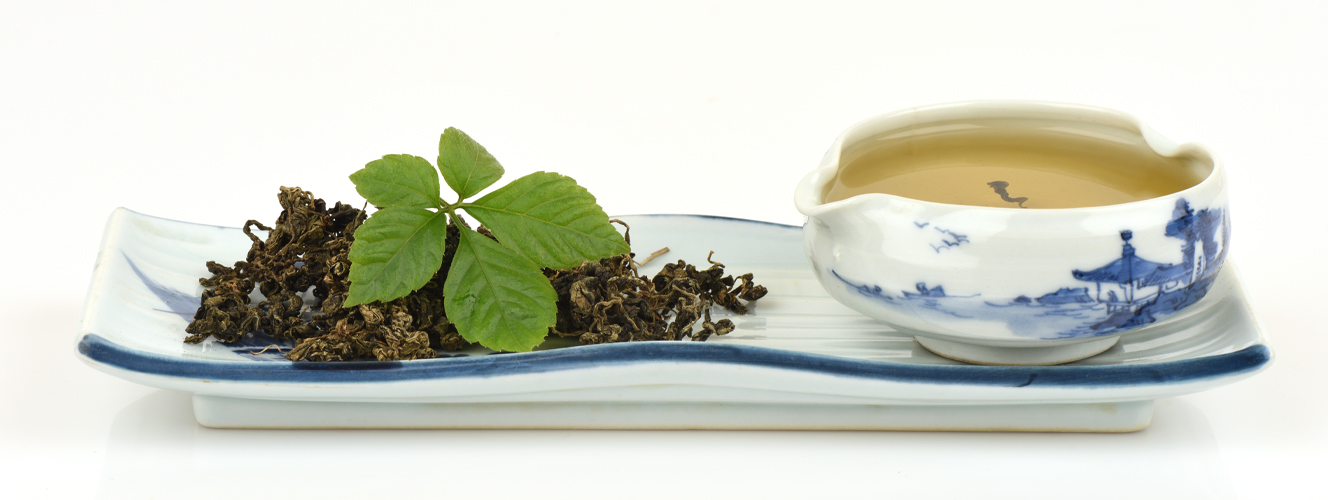
For centuries, Gynostemma remained primarily a local folk remedy rather than a core staple of classical Traditional Chinese Medicine. The people living in the mountainous provinces of Guizhou, Guangxi, and Sichuan in south central China regularly consumed it as a tea, calling it Xiancao and using it in place of green tea. They drank it in the morning for energy and vitality, and in the evening to unwind and promote restful sleep. This biphasic quality, the ability to energize when needed and calm when needed, is characteristic of true adaptogens.
The herb caught broader attention in the 1970s when researchers conducting a census in these mountainous regions of China discovered something striking: an unusually high percentage of centenarians living with remarkably low incidences of the diseases that typically afflict aging populations. This observation led researchers to investigate what might be contributing to this exceptional longevity. One common factor they identified was the regular consumption of Jiaogulan tea. While attributing longevity to a single factor would be overly simplistic (these populations also lived active lives in relatively unpolluted mountain environments with whole food diets), the correlation was strong enough to warrant scientific investigation.
In Traditional Chinese Medicine terms, Gynostemma is classified as having a sweet and slightly bitter taste with a neutral to warm temperature nature. This combination is relatively rare and valuable because it allows the herb to work across multiple organ systems without creating imbalance. It’s described as both Qi-tonifying and Yin-nourishing, able to enhance Yang while supporting Yin. This makes it unusually versatile compared to herbs that work primarily on one constitutional aspect.
The traditional indications included supporting vital energy (Qi), strengthening resistance to infection, reducing inflammation, supporting respiratory health (particularly for chronic bronchitis and coughs), promoting cardiovascular health, and supporting general vitality and longevity. It was used for heart palpitations, exhaustion syndrome, and what TCM would describe as patterns of Qi deficiency. Importantly, it was considered safe for long-term use as a daily tonic rather than reserved only for acute treatment of illness.
What’s particularly interesting about Gynostemma’s traditional profile is that it was used as a daily beverage tea rather than as a concentrated medicinal preparation. This speaks to its gentle nature and suggests that consistent, moderate use over time may be more aligned with how the herb works rather than high-dose therapeutic interventions. The traditional approach wasn’t about taking large amounts for a short period to “fix” something, but rather incorporating it into daily life as a supportive ally for maintaining health and vitality throughout the lifespan.
Gynostemma Adaptogenic Benefits: Stress Relief, Energy, and Immune Support
Gynostemma fits firmly within the category of adaptogenic herbs, those remarkable plants that help the body maintain balance and resilience in the face of various stressors. But unlike some adaptogens that have become wellness buzzwords, Gynostemma’s adaptogenic properties have been demonstrated through both traditional use patterns and modern research.
At the heart of its tonic action is the herb’s ability to modulate the stress response without simply stimulating or sedating. This is the hallmark of a true adaptogen: it helps normalize physiological function regardless of the direction of imbalance. If you’re depleted and fatigued, it supports energy and vitality. If you’re overstimulated and anxious, it promotes calm and resilience. This bidirectional quality comes from the herb’s influence on the hypothalamic-pituitary-adrenal (HPA) axis and its effects on stress hormones.
A randomized, double-blind, placebo-controlled study published in 2019 examined Gynostemma’s effects on anxiety in healthy individuals experiencing chronic psychological stress. Participants who supplemented with Gynostemma extract showed significant reductions in trait anxiety (anxiety proneness) compared to placebo, as measured by standardized anxiety assessment tools. Importantly, this reduction in anxiety occurred without sedation or cognitive impairment. The researchers noted that the herb appeared to help participants maintain mental clarity and function while experiencing less anxiety, suggesting a genuine regulatory effect rather than simple suppression of symptoms.
As a Qi tonic in Traditional Chinese Medicine terms, Gynostemma addresses that fundamental concept of vital energy that Western medicine doesn’t have a direct equivalent for but recognizes through proxies like mitochondrial function, ATP production, and cellular metabolism. People using Gynostemma traditionally reported improvements in stamina, endurance, and recovery from exertion, along with a subtle but noticeable enhancement of mental clarity and focus. This isn’t the jittery, forced energy of stimulants but rather a sense of having adequate reserves to meet the demands of daily life.
Research has shown that polysaccharides extracted from Gynostemma demonstrate anti-fatigue effects in animal studies, increasing swimming endurance time and reducing markers of physical exhaustion. While we should always be cautious about extrapolating directly from animal studies to human experience, these findings align with centuries of traditional use for supporting physical stamina and mental vitality.
The immune-supporting properties of Gynostemma also fall under its tonic benefits. In traditional use, it was employed to increase resistance to infection and support overall resilience, what we might now describe as immune homeostasis. Studies have shown that polysaccharides from Gynostemma can enhance immune cell activity, including macrophage phagocytosis (the ability of immune cells to engulf and destroy pathogens), natural killer cell activity, and T and B cell function. Importantly, this immune enhancement appears to be regulatory rather than simply stimulating. In studies using immunosuppressed mice, Gynostemma helped restore normal immune function without causing overactivation or inflammatory responses.
The calming aspect of Gynostemma’s adaptogenic profile shouldn’t be overlooked. Unlike ginseng, which can sometimes be overstimulating for certain individuals, Gynostemma is described as a “cooling” adaptogen in TCM terms. This makes it more suitable for people who run warm, who have difficulty sleeping, or who experience anxiety as part of their stress response. The traditional practice of drinking Gynostemma tea in the evening to promote relaxation and sleep speaks to this calming quality, even as the same herb supports energy when consumed in the morning.
This versatility as both energizing and calming, immune-supporting without being immune-stimulating, and stress-adaptive without being sedating or stimulating makes Gynostemma an ideal foundational tonic herb. It’s the kind of herb that can be used daily over long periods as general support for resilience and vitality, rather than reserved for acute interventions or cycled on and off.
These adaptogenic qualities make Gynostemma a valuable daily tonic, but they’re just the beginning of the story. Modern research has uncovered specific health benefits that help explain why mountain communities drinking this tea daily experienced such remarkable longevity.
In Part 2, we’ll explore the cardiovascular, metabolic, and liver support that science has validated, from cholesterol management to blood sugar regulation to fatty liver protection.
References
Choi, E.K., Won, Y.H., Kim, S.Y., Noh, S.O., Park, S.H., Jung, S.J., Lee, C.K., Hwang, B.Y., Lee, M.K., Ha, K.C., Baek, H.I., Kim, H.M., Ko, M.H., & Chae, S.W. (2019). Supplementation with extract of Gynostemma pentaphyllum leaves reduces anxiety in healthy subjects with chronic psychological stress: A randomized, double-blind, placebo-controlled clinical trial. Phytomedicine, 52, 198-205.
View paper | PubMed
Gauhar, R., Hwang, S.L., Jeong, S.S., Kim, J.E., Song, H., Park, D.C., Oh, W.K., Huh, T.L., & Kim, J.B. (2012). Heat-processed Gynostemma pentaphyllum extract improves obesity in ob/ob mice by activating AMP-activated protein kinase. Biotechnology Letters, 34(9), 1607-1616.
View paper | PubMed
Ji, X., Shen, Y., & Guo, X. (2018). Isolation, structures, and bioactivities of the polysaccharides from Gynostemma pentaphyllum (Thunb.) Makino: A review. BioMed Research International, 2018, 6285134.
View paper | PubMed
Li, H., Fan, J., Zhao, Y., Zhang, X., Dai, B., Zhan, X., Yin, Z., Gu, H., & Wei, W. (2016). Immunomodulatory and antioxidant effects of polysaccharides from Gynostemma pentaphyllum Makino in immunosuppressed mice. Molecules, 21(8), 1085.
View paper | PubMed
Nayyer, D., Yan, X., Xu, G., Shi, M., Garnham, A.P., Mathai, M.L., & McAinch, A.J. (2023). Gynostemma pentaphyllum increases exercise performance and alters mitochondrial respiration and AMPK in healthy males. Nutrients, 15(22), 4817.
View paper | PubMed
Nguyen, P.H., Gauhar, R., Hwang, S.L., Dao, T.T., Park, D.C., Kim, J.E., Song, H., Huh, T.L., & Oh, W.K. (2011). New dammarane-type glucosides as potential activators of AMP-activated protein kinase (AMPK) from Gynostemma pentaphyllum. Bioorganic & Medicinal Chemistry, 19(20), 6254-6260.
View paper | PubMed
Su, C., Li, N., Ren, R., Wang, Y., Su, X., Lu, F., Zong, R., Yang, L., & Ma, X. (2021). Progress in the medicinal value, bioactive compounds, and pharmacological activities of Gynostemma pentaphyllum. Molecules, 26(20), 6249.
View paper | PubMed
Zhao, T.T., Shin, K.S., Park, H.J., Kim, Y.B., Seo, S.W., Kim, C.D., & Lee, M.K. (2015). Anxiolytic effects of herbal ethanol extract from Gynostemma pentaphyllum in mice after exposure to chronic stress. Molecules, 18(4), 4342-4356.
View paper | PubMed

Mark J. Kaylor is a passionate advocate for holistic health and natural remedies, with a focus on extending both lifespan and healthspan. As the founder of the Radiant Health Project and host of Radiant Health Podcast, Mark blends in-depth research with traditional wisdom to empower others on their journey to vibrant health. Through his writing and speaking, he shares insights into the transformative power of herbs, nutrition, and lifestyle practices.
Disclaimer: All information and results stated here is for educational and entertainment purposes only. The information mentioned here is not specific medical advice for any individual and is not intended to be used for self-diagnosis or treatment. This content should not substitute medical advice from a health professional. Always consult your health practitioner regarding any health or medical conditions.