


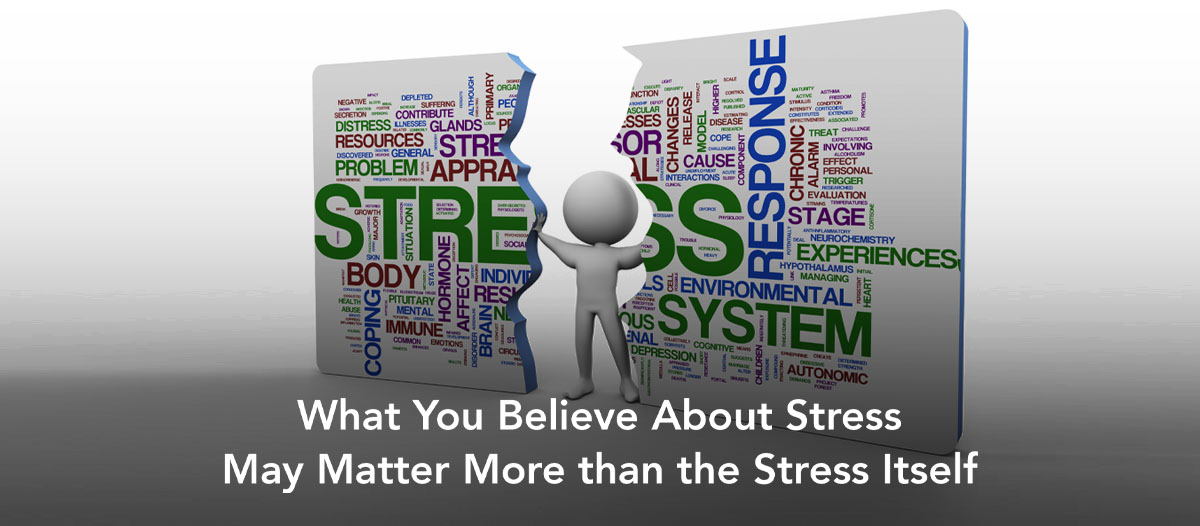
What You Believe About Stress May Matter More than the Stress Itself
By Mark J Kaylor
At a Glance
- What you believe about stress shapes how your body responds to it, influencing cortisol patterns, cardiovascular function, and the conditions in which healing happens.
- The nervous system reads stressors as either threats or challenges, and the two responses differ in measurable ways, from hormonal profiles to cardiovascular patterns to the body’s capacity for tissue repair.
- Traditional Chinese Medicine’s concept of Shen and modern stress science arrive at the same recognition: the mind continuously shapes the body’s regulatory environment.
- Stress appraisal is a modifiable variable. Practices that build genuine resources and nourish the nervous system can shift it over time, steadily and cumulatively.
Something happens in your body before you are even aware of it. A difficult phone call lands. A symptom shows up uninvited. A demand arrives that you were not expecting. And in the space of a heartbeat, your nervous system has already begun shaping your response, not based on the stressor itself, but on a question it asks beneath the level of conscious thought: Do I have what I need to meet this?
How your body answers that question has profound implications for your health, your capacity to heal, and the way stress accumulates or resolves over time. And the good news, supported by a growing body of rigorous research, is that the answer is far more shapeable than most of us have been led to believe.

The Stanford Research Worth Knowing
Psychologist Alia Crum at Stanford has spent years studying what she calls “stress mindset,” the underlying beliefs a person carries about whether stress is fundamentally harmful or fundamentally useful. What her team found challenges a great deal of conventional wisdom about stress management.
In one study, employees at a financial company were divided into groups. One group spent a week watching videos that portrayed stress as damaging, something that erodes health and degrades performance. Another group watched videos that framed stress as functional, a signal that sharpens focus and builds resilience when met with the right orientation. After just one week, those in the second group showed measurably better outcomes across multiple measures of health, performance, and overall well-being. They were also more open to feedback, a subtle but telling marker of someone moving toward experience rather than away from it.
Cortisol tends to get a bad reputation, but it is worth appreciating what it actually does. It sits at the heart of your body’s stress response, touching immune function, blood sugar, sleep, inflammation, and tissue repair. The shape of your cortisol response to a stressor, how high it rises, how long it stays elevated, how cleanly the body returns to equilibrium afterward, ripples across nearly every system you have. Crum’s research shows that your beliefs about stress influence that shape in ways that can be measured. That is a remarkable finding, and one that opens real possibilities for how we approach health and healing.
Two Very Different Physiological Stories
Your body responds quite differently depending on whether it reads a stressor as a threat or a challenge, and the distinction goes deeper than psychology.
When your nervous system reads a situation as a challenge, something you have the resources to meet, the response is efficient and growth-oriented. Cardiac output increases, blood flows readily to the brain and muscles, and stress hormones mobilize quickly and resolve cleanly. The hormonal signature tends to favor DHEA alongside cortisol, a balance researchers associate with thriving rather than merely surviving.
When the body reads a situation as a threat, something that exceeds your available resources, a different cascade unfolds. The HPA axis activates more strongly, cortisol climbs higher and lingers longer, and the cardiovascular system shifts into a more defensive posture. The body is preparing to get through, not to grow. And because cortisol’s half-life is considerably longer than the initial adrenaline surge, that threat response continues shaping your physiology long after the stressor has passed.
For people living with chronic illness, difficult recoveries, or ongoing life pressures, this distinction carries particular weight. Many find themselves in a sustained state of threat appraisal, not necessarily because their circumstances are overwhelming, but because they have absorbed stories over time, from the medical system, from culture, from their own history, that their body is fragile, their resources insufficient, their situation precarious. Those stories become the lens through which each new symptom or setback gets read. And that lens is not passive. It is actively shaping the physiology of healing.

The Body Follows the Story
Crum’s work sits within a broader field sometimes called expectancy science, the study of how anticipated outcomes influence actual physiological processes. The placebo research that feeds into this field has matured well beyond the old dismissal of “it’s all in your head.” Open-label placebos, where people know they are receiving an inert treatment, still produce real, measurable benefits in conditions ranging from irritable bowel syndrome to cancer-related fatigue. The anticipation of relief, consciously held, activates genuine neurochemical and immune pathways.
The brain is, at its core, a prediction machine. It is continuously modeling what is likely to happen next and allocating the body’s resources accordingly. When healing feels possible, the nervous system orients toward the conditions that support it. When deterioration feels inevitable, it orients toward defense and conservation. The story you carry about your own body, whether it is resilient or fragile, whether recovery is available to you, shapes that orientation continuously, not in dramatic lurches but in the steady accumulation of thousands of small physiological moments.
That is worth sitting with. The narrative is not separate from the healing. It is part of the environment in which healing either flourishes or struggles.
Ancient Wisdom, Contemporary Confirmation
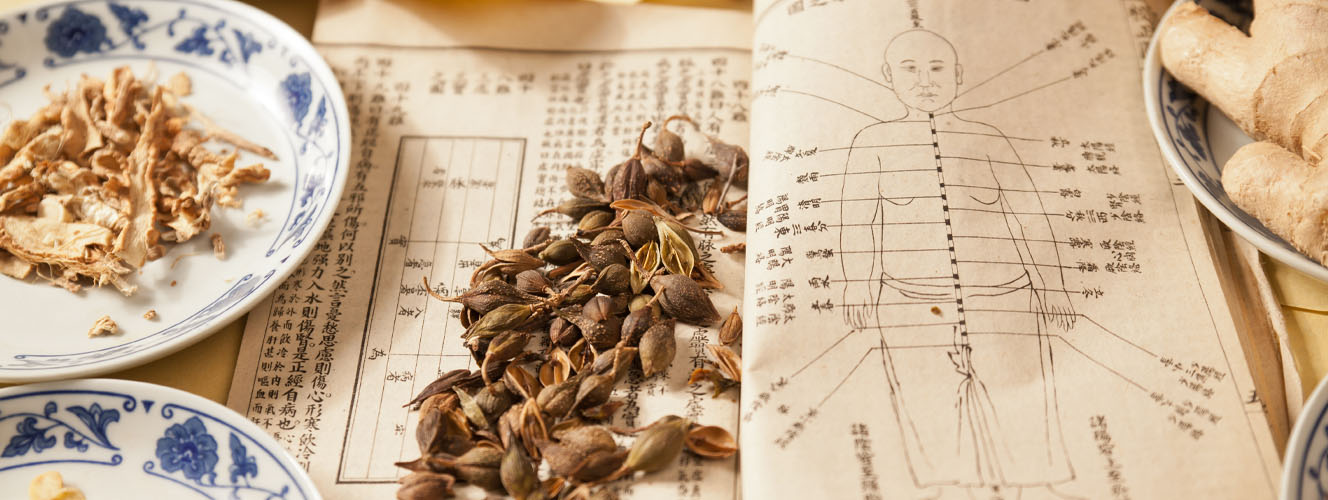
Traditional Chinese Medicine has understood this for a very long time, though the language it uses is quite different.
In TCM, Shen, often translated as spirit or mind and understood to reside in the Heart, governs not just awareness but the coherence of the whole person. When Shen is nourished and settled, the other systems find their harmony. When Shen is disturbed, by fear, by unresolved grief, by the chronic low-grade agitation of feeling perpetually threatened, that disturbance radiates into the whole. The Liver loses its capacity to govern the smooth flow of Qi. The Kidneys struggle to conserve Jing. The Spleen cannot transform nourishment as it should.
For those schooled in the classical tradition, this is precise clinical observation, not poetry. The Heart-Mind is woven into the body’s regulatory fabric. It does not send occasional memos from above. It continuously shapes how resources are distributed and how the body responds to the demands placed on it.
Across centuries and languages and entirely different epistemological traditions, both ancient and contemporary medicine have arrived at a similar recognition: what the mind holds shapes what the body does. That convergence feels significant.

What Becomes Possible
The practical implications here are real, and they reach well beyond the common advice to “think positive.”
Stress appraisal is a modifiable variable. That means the way you relate to stress, your baseline orientation toward it, can shift. And when it does, the physiology shifts with it. Several approaches have emerged from this research that translate well into everyday life.
Befriending the stress response itself. Crum’s work, along with research by Jeremy Jamieson at the University of Rochester, suggests that understanding physiological arousal during stress as functional rather than alarming is itself a meaningful intervention. The racing heart, the heightened attention, the surge of energy that comes with a stressor: these are the body mobilizing on your behalf. Meeting them with that understanding, rather than with fear or resistance, tends to shift the appraisal toward challenge and changes what those responses actually do in the body.
Building genuine resources. The threat-challenge balance shifts when your perceived resources grow. Sleep, nourishing food, movement, strong relationships, adaptogenic herbs and mushrooms, and contemplative practice all build real physiological capacity. These are not lifestyle extras. They are the foundation that makes challenge appraisal possible, because the body knows from experience that it has reserves to draw on.
Nourishing Shen. In the classical tradition, Shen cannot be argued into settled clarity. It has to be invited there, through conditions that allow the nervous system to remember what safety feels like. Meditation, qi gong, time in nature, prayer, the slow repetition of practices that ask nothing of you except presence: these work directly on the appraisal mechanism itself. A nervous system that knows how to rest develops a different default orientation. It begins to recognize stillness not as an absence of productivity but as a resource being built. Over time, the question that sits beneath every stress response, do I have what I need to meet this?, begins to find a different answer, because the body has learned, through practice, that it does.
Tending the narrative. This is not the same as positive thinking, and the distinction matters. Positive thinking asks you to override what is real. What this research points toward is something different: examining whether the stories you carry about your body are accurate, or whether they have been shaped by fear, by medical encounters that emphasized fragility, by the slow accumulation of difficult experience into an identity built around limitation. For those moving through chronic illness or complex health challenges, skilled practitioners across both traditional and integrative medicine understand that reframing illness as a signal rather than a verdict, and locating genuine resources rather than cataloguing only deficits, is therapeutically meaningful. The story shapes the soil in which healing grows.
An Invitation Worth Accepting
It would be easy to overstate what this research means, and the wellness world often does. Beliefs do not instantly reprogram physiology. There is no affirmation powerful enough to resolve a threat response that has accumulated over years of illness, loss, or unrelenting pressure. This is not that kind of invitation.
What the science does offer is something more durable: evidence that the way you relate to stress, your baseline orientation toward it, is a variable. It can shift. And when it does, the physiology shifts with it, steadily and cumulatively, through every appraisal and every anticipation and every story you carry about what your body is capable of.
Over time, the physiological cost of sustained threat appraisal is real and significant. So is the benefit of gradually, genuinely cultivating a stance of capacity and resilience. This does not require pretending that difficulty is not difficult. It requires something more interesting: learning to trust that you have more resources than you may have been taught to believe.
Ancient healers knew this. Contemporary researchers are confirming it with increasing precision. The body has always been listening to the story the mind tells. The invitation, now as ever, is to make that story one worth living inside.
Key Takeaways
- Your stress mindset, the underlying beliefs you carry about whether stress is harmful or functional, measurably shapes how your body responds to it.
- Threat appraisal and challenge appraisal produce distinct hormonal and cardiovascular profiles, with real and lasting consequences for healing.
- The cortisol response to stress, how high it rises, how long it lingers, and how cleanly it resolves, is influenced by the story you hold about what stress means.
- Open-label placebo research confirms what TCM has long recognized: the body follows the orientation of the mind through genuine neurochemical and physiological pathways.
- Stress appraisal is a modifiable variable. Building genuine resources, nourishing Shen, and tending the narrative you carry about your body all shift it, cumulatively and over time.
- Radiant health is not built in spite of difficulty but through learning to meet it with the understanding that you carry more capacity than you may have been taught to believe.
References:
- Crum, A. J., Salovey, P., & Achor, S. “Rethinking Stress: The Role of Mindsets in Determining the Stress Response.” Journal of Personality and Social Psychology, 2013. Available at:
- Crum, A. J., Jamieson, J. P., & Akinola, M. “The Role of Stress Mindset in Shaping Cognitive, Emotional, and Physiological Responses to Stress.” Anxiety, Stress, & Coping, 2017. Abstract/full text:
- Crum, A. J., & Lyddy, C. “The Power of Mindsets and the Art of Stressing Mindfully.” In The Power of Mindsets (chapter PDF). Columbia University. https://business.columbia.edu/sites/default/files-
- Jamieson, J. P., Nock, M. K., & Mendes, W. B. “Mind Over Matter: Reappraising Arousal Improves Cardiovascular and Cognitive Responses to Stress.” Journal of Experimental Psychology: General, 2012.
- Jamieson, J. P. “Reappraising Stress Arousal Improves Performance and Reduces Anxiety.”
- Turner, M. J., Jones, M. V., et al. “Challenge and Threat: A Critical Review of the Literature and an Alternative Conceptualization.” Frontiers in Psychology, 2019.
- Kaptchuk, T. J., Friedlander, E., Kelley, J. M., et al. “Placebos Without Deception: A Randomized Controlled Trial in Irritable Bowel Syndrome.” PLoS ONE, 2010.
- Hoenemeyer, T. W., Kaptchuk, T. J., Mehta, T. S., & Fontaine, K. R. “Open-label Placebo Treatment for Cancer-related Fatigue: A Randomized-controlled Clinical Trial.” Supportive Care in Cancer, 2018. PubMed:

Mark J. Kaylor is a passionate advocate for holistic health and natural remedies, with a focus on extending both lifespan and healthspan. As the founder of the Radiant Health Project and host of Radiant Health Podcast, Mark blends in-depth research with traditional wisdom to empower others on their journey to vibrant health. Through his writing and speaking, he shares insights into the transformative power of herbs, nutrition, and lifestyle practices.
The Radiant Health Project is a not-for-profit initiative dedicated to cutting through wellness industry hype and sharing evidence-informed, traditional wisdom for genuine health.
Disclaimer: All information and results stated here is for educational and entertainment purposes only. The information mentioned here is not specific medical advice for any individual and is not intended to be used for self-diagnosis or treatment. This content should not substitute medical advice from a health professional. Always consult your health practitioner regarding any health or medical conditions.