


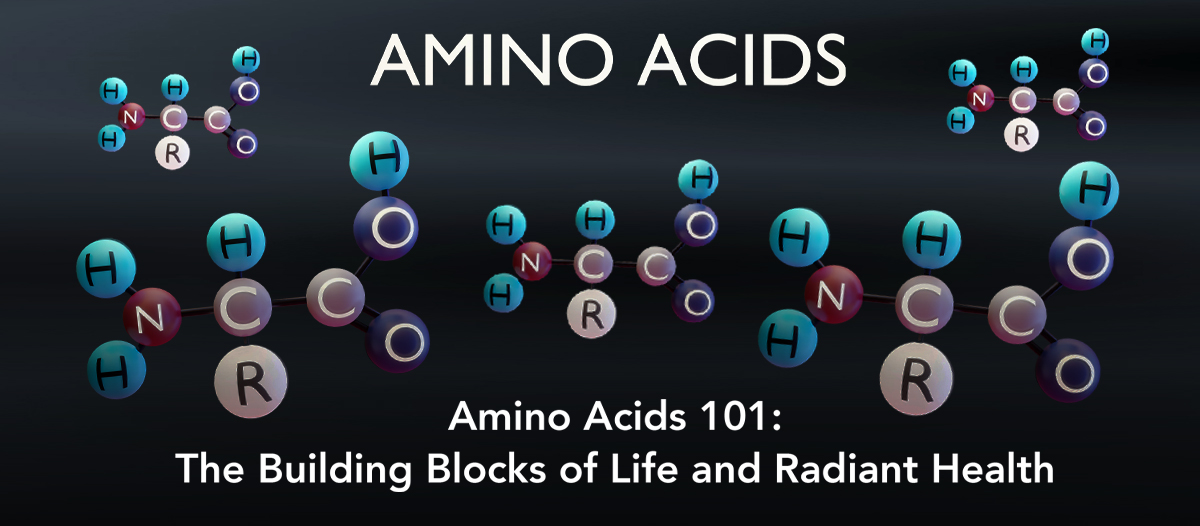
Amino Acids 101:
The Building Blocks of Life and Radiant Health
by Mark J Kaylor
What if we told you that every cell, tissue, enzyme, and strand of muscle in your body is built from just a small handful of tiny molecules?
They’re called amino acids, and they’re the foundation of every biological function you depend on — yet most people have no idea what they really are or how they work.
In this new series, we’ll explore amino acids one by one in plain language. But first, let’s start with the basics.
What Are Amino Acids?
At their core, amino acids are small organic molecules made mostly of carbon, hydrogen, oxygen, and nitrogen. On their own, they may not look like much — but when linked together, they form proteins, which are the basic working and building materials of your body.
You can think of amino acids as Lego bricks. On their own, they’re simple. But snap them together in different ways, and they create incredibly complex structures—muscles, skin, enzymes, hormones, even parts of your immune system.
There are 20 different amino acids that your body uses to build proteins. These proteins then carry out nearly every function in your body — from moving your muscles to sending messages in your brain to repairing cells when you get injured.
But amino acids don’t just build proteins. They also act on their own in ways that influence mood, sleep, energy, immune strength, detoxification, metabolism, and even focus. Some are precursors to neurotransmitters (the brain’s chemical messengers), others help create antioxidants like glutathione, and some even help transport nutrients where they’re needed most.
In short, amino acids are the basic language your body speaks — the raw materials for healing, repair, and vitality. Without them, nothing works quite the way it should.
What Does “Essential” Mean?
An essential amino acid is one that your body cannot make on its own — you have to get it from food.
Without enough of these essential amino acids, your body can’t function properly. It’s not just about muscle mass or athletic performance; it’s about healing, mood, energy, immune strength, and so much more.
The 9 Essential Amino Acids
Each of these plays a unique role in your health and well-being:
- Histidine – Important for growth, blood cell production, and nervous system support
- Isoleucine – Helps with energy regulation, immune function, and muscle repair
- Leucine – A key player in building muscle and supporting recovery
- Lysine – Crucial for immune health, collagen formation, and absorption of minerals
- Methionine – Supports detoxification and antioxidant defense
- Phenylalanine – A precursor to neurotransmitters that affect mood and alertness
- Threonine – Important for skin, connective tissue, and gut lining health
- Tryptophan – Known for its calming effects; helps create serotonin and melatonin
- Valine – Aids in muscle metabolism, repair, and energy production
Each of these aminos doesn’t just support one thing — they often work together in synergy. And a deficiency in even one can ripple through multiple systems in the body.
The Others: The 11 Non-Essential (But Still Important) Amino Acids
While the essential 9 get most of the spotlight, the other 11 amino acids are just as vital for your health. These are often called “non-essential” because your body can usually make them from other nutrients — but that doesn’t mean you can ignore them.
Some become “conditionally essential” during times of stress, illness, or aging, when your body’s ability to make them isn’t enough to meet demand.
Here’s a quick introduction to each of these unsung heroes:
- Alanine – Supports energy production and helps break down glucose
- Arginine – Important for circulation, immune defense, and wound healing (conditionally essential)
- Asparagine – Helps build proteins and supports nervous system function
- Aspartic Acid (Aspartate) – Plays a role in energy production and removing toxins from cells
- Cysteine – Key for detoxification and antioxidant production (conditionally essential)
- Glutamic Acid (Glutamate) – Crucial for brain function and as a neurotransmitter
- Glutamine – Fuels cells in the gut and immune system, especially during stress (conditionally essential)
- Glycine – Supports collagen production, sleep, detoxification, and nervous system balance
- Proline – Important for skin, connective tissue, and joint repair
- Serine – Involved in brain function, metabolism, and immune health
- Tyrosine – Precursor to dopamine and other key neurotransmitters (conditionally essential)
Many of these aminos are involved in healing, mental health, digestion, and resilience. In future posts, we’ll explore some of the more health-relevant ones like glycine, glutamine, and tyrosine, even though they aren’t part of the “essential 9.”
Why Amino Acids Matter for Radiant Health
Most people associate amino acids with gym culture or protein shakes, but they’re vital for everyone — whether you’re an athlete, a parent, recovering from illness, or simply trying to age gracefully.
Amino acids play a part in:
- Healing and tissue repair
- Balancing mood and sleep
- Immune function
- Hormone and enzyme production
- Energy levels
- Detoxification
- Skin, hair, and joint health
- And yes — building muscle
In short, they are fundamental to vibrant, radiant health.
What to Expect in This Series
This is the first in a new series where we’ll explore each essential amino acid in more depth — what it does, where to find it in real food, and how it may support your well-being in very real ways.
We’ll also touch on a few other noteworthy amino acids like glycine, glutamine, and tyrosine, which aren’t essential but still play powerful roles in health and healing.
Whether you’re just starting your health journey or brushing up on the basics, this series will help you understand the foundational language your body speaks — and how to nourish it wisely.
Ready to Begin?
Stay tuned for our next post where we’ll spotlight one of the most calming, mood-supporting amino acids: Tryptophan.
Because radiant health begins with understanding — and it’s the simple things, like amino acids, that so often make the biggest difference.

Mark J. Kaylor is a passionate advocate for holistic health and natural remedies, with a focus on extending both lifespan and healthspan. As the founder of the Radiant Health Project and host of Radiant Health Podcast, Mark blends in-depth research with traditional wisdom to empower others on their journey to vibrant health. Through his writing and speaking, he shares insights into the transformative power of herbs, nutrition, and lifestyle practices.
Disclaimer: All information and results stated here is for educational and entertainment purposes only. The information mentioned here is not specific medical advice for any individual and is not intended to be used for self-diagnosis or treatment. This content should not substitute medical advice from a health professional. Always consult your health practitioner regarding any health or medical conditions.