


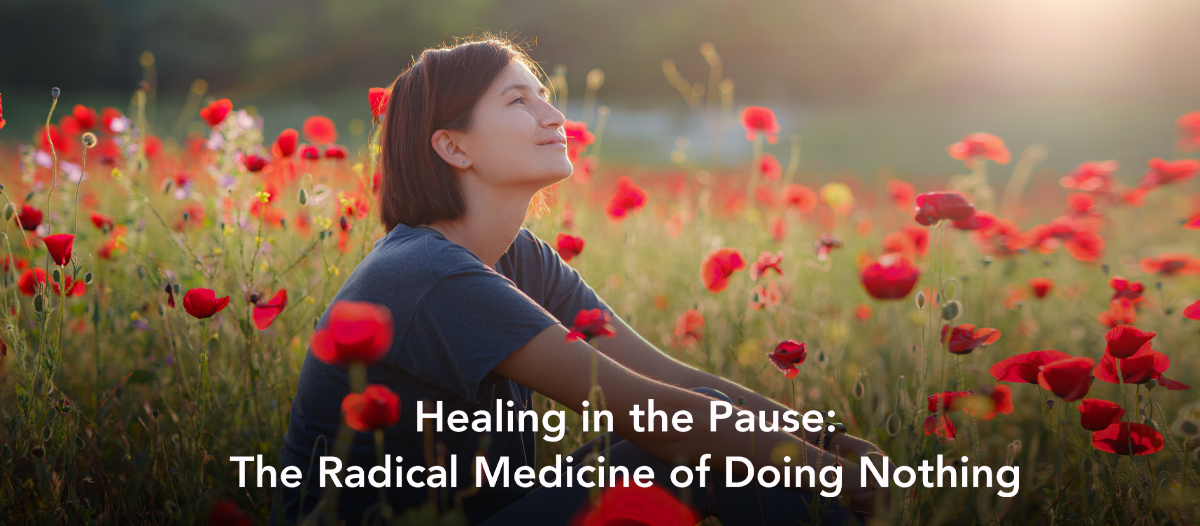
Healing in the Pause:
The Radical Medicine of Doing Nothing
by Mark J Kaylor
In a world driven by productivity and performance, simply being has become a lost art. We schedule, scroll, and strive — constantly tethered to devices and expectations. But underneath the noise and motion, our bodies and minds are yearning for something far more ancient: the sacred stillness of unstructured time.
This isn’t just poetic musing. The science is catching up with what wisdom traditions have long known: healing happens in the pause. And in that pause, we begin to reclaim not just our health — but our humanity.
The Invisible Cost of Constant Doing
What happens when we never stop? The body never fully shifts into rest-and-repair mode. The nervous system stays slightly elevated. Stress hormones keep trickling. Mitochondria — the very engines of our cells — remain in a low-grade state of urgency.
This matters. Because when your mitochondria don’t feel safe, they don’t produce energy efficiently. They hunker down. They prioritize defense over regeneration. And when this becomes chronic, it lays the groundwork for fatigue, inflammation, brain fog, and accelerated aging.
Sleep may become fragmented. Digestion becomes impaired. Focus drifts. Our capacity for empathy and emotional regulation diminishes. Even our immune system starts misfiring, mistaking benign cues for threats — or missing real ones altogether.
This is the silent toll of unrelenting doing — even when we think we’re resting. A night of Netflix isn’t the same as true stillness. Scrolling isn’t presence. The body knows the difference.
And in a culture where rest is confused with laziness, we push on — often unaware that the very thing we think we’re accomplishing is being undermined by the cost of constant motion.
Unstructured Time: A Forgotten Nutrient
Think back to when you were a child. Remember lying in the grass and watching clouds? Wandering with no destination? Sitting by a window with nothing to do but breathe?
That was unstructured time. It wasn’t wasted — it was integration time. Time when the nervous system resets, the brain consolidates, and the soul speaks. Today, we’ve pathologized that kind of time as lazy, unproductive, or boring.
But unstructured time is biologically essential. It enhances:
- Neuroplasticity – When we pause, the brain doesn’t shut down; it rewires. Downtime is when synapses strengthen, new pathways form, and learning is integrated.
- Creativity – Insight thrives in stillness. Many breakthroughs — artistic, scientific, or personal — arrive not in effort, but in the quiet after effort.
- Emotional Processing – When we stop filling every moment, emotions rise to the surface. This gives the nervous system space to metabolize feelings rather than bury them.
- Digestive and Immune Regulation – The parasympathetic nervous system (rest-and-digest mode) governs digestion and immune balance. True stillness activates it.
- Hormonal Balance – Cortisol levels normalize. Melatonin reemerges. Dopamine receptors reset. All of which support more stable mood and energy.
- Relational Presence – When we’re not always elsewhere (in thought or online), we connect more authentically with others — and with ourselves.
In essence, unstructured time feeds radiant health — physically, emotionally, spiritually.
The Paradox of the Pause
Doing nothing isn’t easy. It may bring up discomfort, restlessness, or even fear. That’s because in the quiet, we meet ourselves. We confront what the busyness was keeping at bay.
But if we can stay with it — breathe into it — something extraordinary happens. Our internal rhythms reassert themselves. The body begins to regulate. The mind softens. The heart remembers what it means to feel.
And we return to something primal: a wholeness that was never lost, only crowded out.
Daily Rituals for Restoring the Pause
Here are small ways to reclaim unstructured time in a structured world:
- Sacred Morning Minutes: Begin the day with 5–10 minutes of no stimulation. No phone, no plan. Just being.
- Gaze Time: Let your eyes wander outside a window or into nature without focusing on anything in particular.
- Stillness Breaks: Schedule 5-minute pause points during your day. No input, no task. Just breathe.
- Technology Sabbath: Designate one hour (or one day) a week where devices are put away entirely.
- Mindful Transitions: Pause between activities. Let the nervous system catch up.
These aren’t indulgences. They are acts of biological repair and spiritual reconnection.
An Invitation
You don’t need to retreat to a mountaintop or clear your calendar. The medicine is already here, waiting in the pause between breaths, in the moment between one thought and the next.
So today, let this be your invitation: Step into stillness. Reclaim unstructured time. Let the healing happen in the space you create.
Your body will thank you. Your mind will soften. And your spirit — so long crowded out — will finally have room to breathe.
Reflect:
- When was the last time I allowed myself to do nothing?
- What small moment today could become a space of rest?
- What am I afraid I’ll feel in stillness — and what might I find instead?
Let these questions gently guide you on your Journey to Radiant Health.

Mark J. Kaylor is a passionate advocate for holistic health and natural remedies, with a focus on extending both lifespan and healthspan. As the founder of the Radiant Health Project and host of Radiant Health Podcast, Mark blends in-depth research with traditional wisdom to empower others on their journey to vibrant health. Through his writing and speaking, he shares insights into the transformative power of herbs, nutrition, and lifestyle practices.
Disclaimer: All information and results stated here is for educational and entertainment purposes only. The information mentioned here is not specific medical advice for any individual and is not intended to be used for self-diagnosis or treatment. This content should not substitute medical advice from a health professional. Always consult your health practitioner regarding any health or medical conditions.
Leave A Comment